Bangkok · History
From Riverside founding to two-campus institution in two decades
Shrewsbury International School Bangkok opened on the Chao Phraya in 2003 as a sister school to one of England's oldest public schools. It now runs two campuses and nearly 1,900 students.

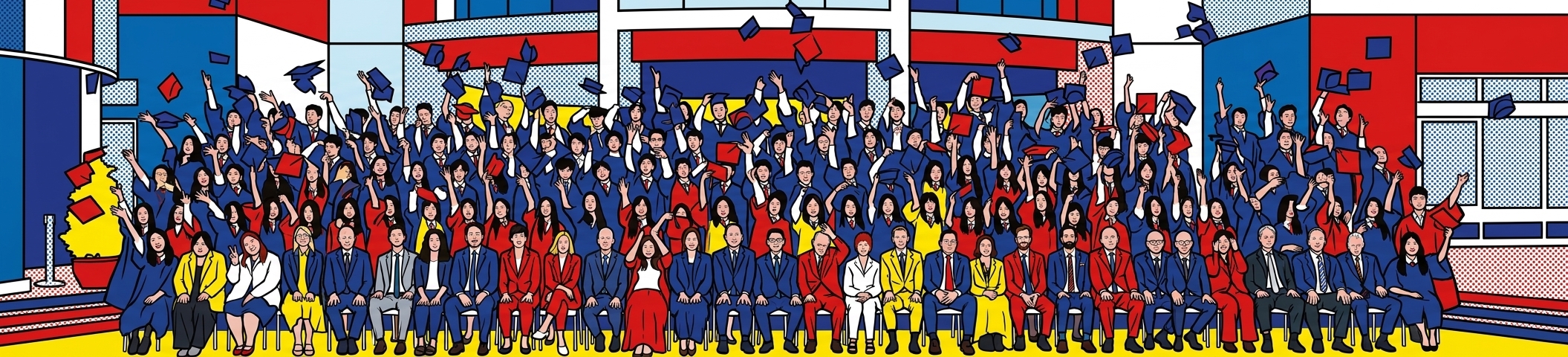
Shrewsbury International School Bangkok opened in September 2003 on the banks of the Chao Phraya River in Bang Kho Laem District, central Bangkok. It was established as a co-educational day school affiliated with Shrewsbury School in Shropshire, a school founded by royal charter in 1552. The Bangkok operation carried the same Latin motto, Intus si recte, ne labora, and adopted the Salopian crest, but diverged from the UK original in one fundamental respect: it opened as a co-educational day school from the start, taking boys and girls from age three through to eighteen.
The school's founder and owner was Chali Sophonpanich, whose family would remain the driving force behind its physical development for decades. Governance was structured around a board of governors with representatives from both the Bangkok school and the UK institution, ensuring close alignment with Shrewsbury School's educational standards.
Leadership
The founding principal was Stuart Morris, previously headmaster at Harrow International School in Bangkok, who oversaw staff recruitment, curriculum setup, and early enrolment growth. Morris served from 2003 to 2005. Stephen Holroyd, who had spent almost twenty years at Shrewsbury School UK as an English teacher, cricket master, housemaster, and eventually Second Master, succeeded him. Holroyd led the Riverside campus for twelve years, through 2017, during which the school secured CIS accreditation and established itself as the dominant British-curriculum school in Thailand. By the time he moved into a broader Director of Schools role for Shrewsbury International in Asia, the Riverside roll had grown to more than 1,600 students. Christopher Seal took over as principal of the Riverside campus in 2017, steering the school through a major capital building programme and the disruptions of the Covid-19 period.
Growth and the second campus
Demand for places, especially at primary level, outpaced what the Riverside site could absorb. In November 2017 the school announced it was building a second campus, a city-centre primary school for up to 640 pupils on a 2.4-hectare site between Sukhumvit and Rama IX roads, with an investment of US$78 million. That City Campus opened in August 2018. According to a PR Newswire announcement at the time, it was built specifically to absorb the waiting list that had formed at Riverside. City Campus caters to children aged two to eleven; students who complete their primary years there are guaranteed a place at Riverside for secondary school.
City Campus grew quickly. Enrolment rose from around 160 students in its first year, 2018-19, to more than 540 by the 2024-25 academic year. A further Early Years building extension opened in November 2024 to meet continued demand, targeting 232 Early Years places per year. The campus received CIS International Accreditation in January 2024, formalising its quality credentials independently of the longer-established Riverside site.
Riverside: Project 2021 and major capital investment
Back at Riverside, a plan hatched in 2016 set out to expand capacity from 1,600 to 2,300 students across the 16-acre riverside site. The construction programme, internally known as Project 2021, was ambitious: underground parking was dug out on Christmas Day 2017 to free up surface space, and building continued through the pandemic. The culmination was the opening in late 2021 of a new senior school complex costing 1.1 billion Thai baht. The centrepiece was the Sir David Lees Innovation Centre, named after the chairman of the board of governors, which housed eighteen university-standard science laboratories across three floors, sixteen mathematics classrooms, four computing suites, a robotics lab, and an innovation space. Attached to it was the Stephen Holroyd Sixth Form Commons, a 4,000 square-metre split-level centre for A-level students with river views, a café, and dedicated higher education counselling facilities. A Sports Performance Complex, including a 340 square-metre strength and conditioning zone, completed the build.
Curriculum and accreditation
Both campuses follow the English National Curriculum from Early Years through to Year 13. The progression runs from the Early Years Foundation Stage, which at City Campus is blended with elements of the Reggio Emilia approach, through Key Stages 1 to 5, with Cambridge IGCSE examinations in Years 10 and 11, and Cambridge AS and A-Level qualifications in the Sixth Form. The school is a member of the Headmasters' and Headmistresses' Conference, affiliated with FOBISIA, and accredited by the Council of International Schools. It is also accredited by ONESQA, Thailand's Office for National Education Standards and Quality Assessment.
Present day
The Riverside campus currently enrols close to 1,900 students aged three to eighteen from roughly forty nationalities, with Thai students forming around seventy percent of the roll and British nationals the second largest group. The campus spans approximately six hectares and includes three libraries holding more than 42,000 books, a Memorial Hall, drama studios, music rooms, art facilities, and two dining halls, in addition to the 2021 senior school complex. Sixth Form leavers go on to universities in the UK, the United States, and Australia each year.
Read the full Shrewsbury International School Bangkok profile →