Hong Kong · History
How 73 students on The Peak became one of Hong Kong's defining international schools
German Swiss International School opened in 1969 after years of failed attempts to unite two expatriate communities. More than five decades on, it remains Hong Kong's only school offering a full German curriculum alongside the IB Diploma.

Origins
The idea of a German-medium school in Hong Kong predates the school itself by the better part of a decade. A group within the Swiss community had already determined by 1964 that it could not sustain such a school alone. The German expatriate community reached the same conclusion independently. Momentum built in 1966 when the two communities began talking seriously about collaboration, only for the 1967 riots to interrupt those plans. Two further attempts, in 1967 and 1968, also came to nothing.
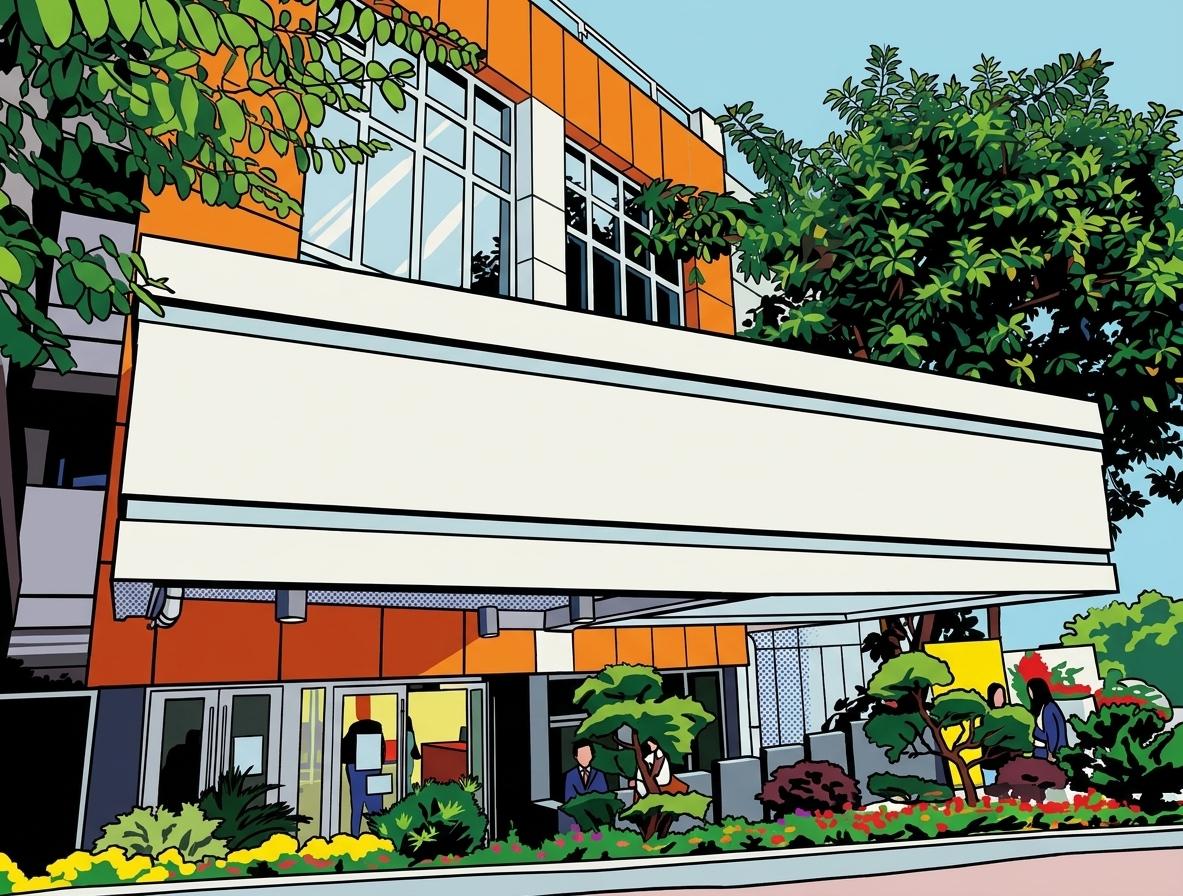
The third attempt held. In 1969, with Ingrid Buchholtz leading the founding effort, German Swiss International School opened its doors at a rented house at 1 Barker Road, The Peak. Seventy-three children enrolled in that inaugural year, German and Swiss students collectively the majority. The startup capital came from corporate backing on both sides: HK$117,000 contributed by 25 West German companies, and HK$78,000 from 18 Swiss firms. A bilingual German-English curriculum was part of the plan from the outset, and the kindergarten, oversubscribed from the start, ran separately at Union Church on Kennedy Road.
Growth and Campus Development
Growing numbers forced the school to move repeatedly in its early years. By 1972 the Hong Kong Government had granted land on Guildford Road free of charge, with construction of what became the upper building beginning in 1973. That same year the West German government appointed Hans Kraus as principal, a sign of the official recognition that followed shortly after. Classes decanted to May Road and then to a former hospital on Borrett Road while the new building took shape. The Guildford Road campus, built at a cost of HK$7 million, opened in 1975 with a total enrolment of 525.
The 1975 opening also prompted a structural change in how the school taught. With concern that students were not mastering either English or German at the level required, GSIS introduced two separate educational streams, one Anglophone and one German-medium. That split, which looked like an administrative fix at the time, became the defining feature of the school's identity.
A second campus arrived in 2007, when the Hong Kong Government awarded GSIS a site at 162 Pok Fu Lam Road. By 2010, that campus had become the permanent home for the kindergarten and lower primary, housing the Deutsche Vorschule in the German stream and Year 1 in the English stream. A five-year Campus Development Plan, adopted by the board in 2008, reshaped the Peak campus to place primary departments in the upper building and secondary in the middle and lower buildings. To keep disruption manageable during construction, upper primary classes decanted to a temporary site in Wan Chai, on Oi Kwan Road, from 2012 to 2016.
Curriculum and Identity
GSIS today runs two parallel streams from kindergarten through to secondary. The German International Stream follows a Gymnasium curriculum based on Thuringia standards, taught primarily in German, and culminates in the Deutsches Internationales Abitur (DIA). The English International Stream delivers the National Curriculum for England, moves through IGCSEs in the upper secondary years, and leads to the IB Diploma Programme. The IB authorisation was granted on 25 January 2013, according to the International Baccalaureate Organisation's school directory. The switch from A-levels and the traditional Abitur to the IB and DIA had taken place earlier, in 2007, when the school moved away from its previous examination structure.
GSIS is the only school in Hong Kong offering a full German curriculum, and in November 2023 it received the "Excellent German School Abroad" quality seal from Germany's Central Agency for Schools Abroad. The German government also subsidises the school and, as has been the case since the early 1970s, supplies the school's principal and a number of teaching staff. The governments of Austria and Switzerland contribute subsidies as well. German International Stream graduates gain access to free tuition and resident visa support at German universities. Starting from the 2019-2020 school year, the school also introduced German-Chinese bilingual kindergarten classes, adding a third language thread to its early years provision.
The school holds CIS (Council of International Schools) membership and is accredited as an IB World School. It is governed by a board of trustees with Swiss representation, and English serves as the language of governance and cross-stream communication.
Present Day
Alexandra Freigang-Krause became principal in February 2024, arriving from Bavaria's central institute of teacher training where she led professional development across the arts, languages, and social studies. She brought nearly 30 years of experience in education, with a particular focus on bilingualism and interculturality. GSIS marked its 55th anniversary in the 2024-2025 school year with a series of events including a time-travel musical, an art exhibition at the German Consulate, and a concert at St John's Cathedral.
The school now enrols around 1,300 students from more than 27 countries across its two Hong Kong Island campuses: the main campus at 11 Guildford Road, The Peak, and the Pok Fu Lam campus at 162 Pok Fu Lam Road. Facilities at The Peak include a 25-metre indoor swimming pool, science laboratories, a black box theatre, music and art rooms, and a rooftop sports pitch. The Pok Fu Lam site serves the youngest students with an adventure playground, treehouse classrooms, and a library.
Academically, the English International Stream posted an average IB Diploma score of 41.2 points across 68 candidates in 2025, the highest result of any school in Hong Kong that year, according to a review of city-wide IB data published by Scholae. The 2025 cohort achieved a 100% pass rate, with 75% of students scoring 40 points or above. Graduates from both streams have gone on to Ivy League universities, Russell Group institutions, and leading German and Hong Kong universities.