Jakarta · History
From embassy classroom to 45-acre campus: BSJ at 50
Founded under British Embassy auspices in 1973, British School Jakarta has grown from a small expatriate school in Permata Hijau into one of Southeast Asia's largest British international schools.

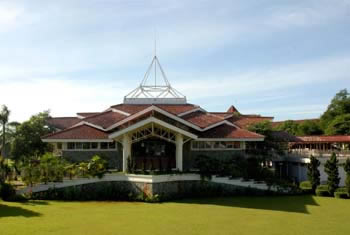
British School Jakarta began in 1973 as a modest provision for the children of British Embassy staff and expatriate families in the Indonesian capital. The British Embassy provided the initial backing, and a committee of parents ran the school in its earliest years. Two years later, the committee approached a group of British businessmen with a plan to move into purpose-built premises and expand the intake.
Origins
In 1975, that parent committee approached a group of British businessmen to set up an enlarged facility in specially built premises in Permata Hijau, a residential district in south Jakarta. A year later, in 1976, the school was formally constituted as a Yayasan, the Indonesian legal form for a foundation, placing it on a permanent, non-profit footing under Indonesian law. The British and Australian Embassies retained seats on the Council of Trustees as founder members, a governance arrangement that persists to this day.
In the early 1980s, the school was renamed The British International School, a change made under royal command. Princess Diana visited the school in 1989, one of several royal connections the institution accumulated over its first decades. By 1990 enrolment pressure was acute enough to trigger what the school called the Relocation Project: market research and feasibility studies pointed to the need for a new site, a larger intake, and an extended age range.
The Move to Bintaro
The Permata Hijau site closed in the 1993–94 school year. The school moved to a purpose-built campus of 13 hectares in Bintaro, southwest of Jakarta. Prince Edward officially opened the new British International School in March 1994, completing the first stage of the project that summer. The Bintaro site, now described across school materials as a 45-acre estate, sits approximately 7 kilometres southwest of central Jakarta in what is today the city of South Tangerang, Banten province.
Phase Two of the campus development followed in 1997, adding a cafeteria, an art and technology block in the secondary school, and a range of smaller improvements. In 1999 the school opened a separate Early Years Education Centre in Pondok Indah, closer to the main expatriate corridor in south Jakarta, responding to demand for pre-school and reception places. That satellite centre was later consolidated: the Early Years Centre was comprehensively refurbished and reopened on the Bintaro campus in 2012.
The performing arts gained a significant facility in February 2007 when the BIS World Theatre opened on the Bintaro campus, providing three performance areas. The Duke of York, Prince Andrew, formally opened the theatre on 6 March 2008. A secondary library building with a café, meeting rooms, and additional teaching spaces followed in early 2009. An extension to the IB Centre, built to meet growing post-16 demand, was completed in December 2009.
Name Change and Recent Development
In 2014 the school shed the word 'International' from its name to comply with new Indonesian regulations restricting the use of that designation. The institution became British School Jakarta, the name it carries today. The change was administrative, not substantive; the curriculum, governance, and British character of the school were unaffected.
Construction of a new sports hall on the East Campus commenced in 2015 and the facility came into use in mid-2017. From 2019, numerous classrooms were remodelled to reflect updated approaches to learning and teaching. The most recent addition to the campus is The Arena, an all-weather venue for sport, performance, and community events, completed in 2025. The campus now holds a 750-seat theatre, an Olympic-sized swimming pool, five football fields, twelve badminton courts, five tennis courts, and the new Arena.
In 2015 the school was awarded the TES British International School of the Year, a recognition of academic and co-curricular performance across its secondary and sixth-form programmes.
Curriculum and Accreditation
BSJ runs the Early Years Foundation Stage in Kindergarten, the English National Curriculum through primary, the IB Middle Years Programme in Years 7 to 11, and the IB Diploma Programme in Years 12 and 13. Students in secondary also sit IGCSE examinations. The school is a non-profit, non-franchise institution, a point it emphasises to distinguish itself from group-owned international school operators.
BSJ is a founding member of the Federation of British International Schools in Asia, joining FOBISIA in 1988. It holds membership of the Council of British International Schools (COBIS), the Headmasters' and Headmistresses' Conference (HMC), and the East Asia Regional Council of Schools (EARCOS). In July 2023, a joint evaluation team from the Council of International Schools, the International Baccalaureate, and the Western Association of Schools and Colleges reaccredited the school for a further five years, extending accreditation to 2028. Indonesia's Ministry of Education granted national accreditation in 2019. According to International Schools Guide Jakarta, BSJ also holds British Schools Overseas (BSO) inspection status, rated Outstanding.
Present Day
The school enrols around 1,400 students from more than 50 nationalities, aged 2 to 18. It employs approximately 160 teaching staff and 420 staff in total across the campus. Phil Edwards is currently serving as Interim Principal. The school runs more than 260 extracurricular activities spanning sport, arts, and academic clubs, and competes regionally through FOBISIA and SEASAC. A partnership with Manchester City FC provides professional football coaching on site. BSJ remains a non-profit foundation, independent of any school group or commercial operator, governed by its Council of Trustees and Board of Governors.