Singapore · History
From a Tanglin Club supper shed to a century of British education
Tanglin Trust School opened in March 1925 with five pupils and a borrowed shed. A hundred years on, it is the oldest British international school in Southeast Asia, with 2,800 students and a campus secured until 2056.

In March 1925, Anne Griffith-Jones converted a disused supper shed at the Tanglin Club into a classroom and started teaching five children. That was the beginning of what is now Tanglin Trust School, the oldest British international school in Southeast Asia.
Origins
Griffith-Jones, a British educationalist who would later be awarded an OBE, had come to Singapore on holiday and decided to stay. She founded what she called the Tanglin Day School, later renamed Tanglin Preparatory School, to serve the children of the British expatriate community. She was known to pupils and parents alike as "Miss Griff."
The school served children up to the age of eight at first, but grew quickly. In 1934, Griffith-Jones opened a second campus: a boarding school in the Cameron Highlands of Malaya, educating children up to age 12.
War and survival
The Japanese occupation of Malaya in 1942 forced both schools to close. Griffith-Jones and several colleagues were interned at Changi Prison. The schools reopened after the war, but the Cameron Highlands campus faced fresh difficulty: from 1948, the Malayan Emergency required the school to operate under full-time armed guard, with children transported to and from the site in armoured vehicles. By 1950, the Federal Government closed the Cameron Highlands school on security grounds, and the building was sold to the British War Office.
From private school to public trust
Griffith-Jones retired in 1958 and sold her private company, Tanglin School Ltd, to the British European Association, now the British Association of Singapore. Three years later, in 1961, governance passed to a newly formed non-profit body, Tanglin Trust Ltd, which has run the school ever since. That non-profit structure remains in place today: all tuition fees are reinvested directly into the school.
As demand grew, the Trust expanded its footprint. In 1971 it opened Weyhill Preparatory School at Portsdown Road, a direct response to oversubscription at Tanglin Prep. In 1974 it took over management of Raeburn Park School, originally founded in 1954 by officials of the Singapore Harbour Board for the children of expatriate shipping staff. By 1976, with the final withdrawal of British troops from Singapore, Raeburn Park also relocated to Portsdown Road, where it operated alongside Weyhill on a shared site.
The 1981 merger and the Portsdown Road campus
In 1981, Tanglin Preparatory School, Weyhill Preparatory School, and Raeburn Park School merged at Portsdown Road to form Tanglin Infant School and Tanglin Junior School. That consolidated campus, at 95 Portsdown Road in Singapore's one-north district, has been the school's home ever since. The school was subsequently renamed Tanglin Trust School. The eight house names that students carry today, including Cameron, Raeburn, Weyhill, and Alexandra, each mark a place significant to that combined history, as noted by the school on its own heritage pages.
A Senior School was added to the campus in the years that followed, completing the 3-to-18 structure. In 2001, the house system was extended across the growing Senior School.
Curriculum and identity
The school runs the English National Curriculum from Nursery through to IGCSE in Years 10 and 11. At Sixth Form, students choose between A Levels and the IB Diploma. Tanglin was the first school in Singapore to offer that dual pathway, and remains the only independent school in the city-state to do so.
On inspection, the school holds a strong record. Tanglin is the only international school in Singapore inspected under the British Schools Overseas (BSO) framework, which is recognised by Ofsted. All three schools, Infant, Junior, and Senior, have been rated Outstanding, the highest possible grade, across five consecutive inspections. The 2025 inspection confirmed the Outstanding rating once again, across every category. The school also holds accreditation from the Council of International Schools (CIS) and is a member of COBIS, HMC, and IAPS.
In 2023 the school was named International School of the Year by ISC Research, selected from 291 entries submitted by international schools across 61 countries. It also won the Ethical Values Education Award that year for becoming the first school outside the United Kingdom to receive the Gold UNICEF Rights Respecting Schools Award.
Present day
The school currently enrols around 2,800 students drawn from more than 50 nationalities, spread across Infant, Junior, Senior, and Sixth Form. Craig Considine serves as Chief Executive Officer, with John Ridley as Director of Learning.
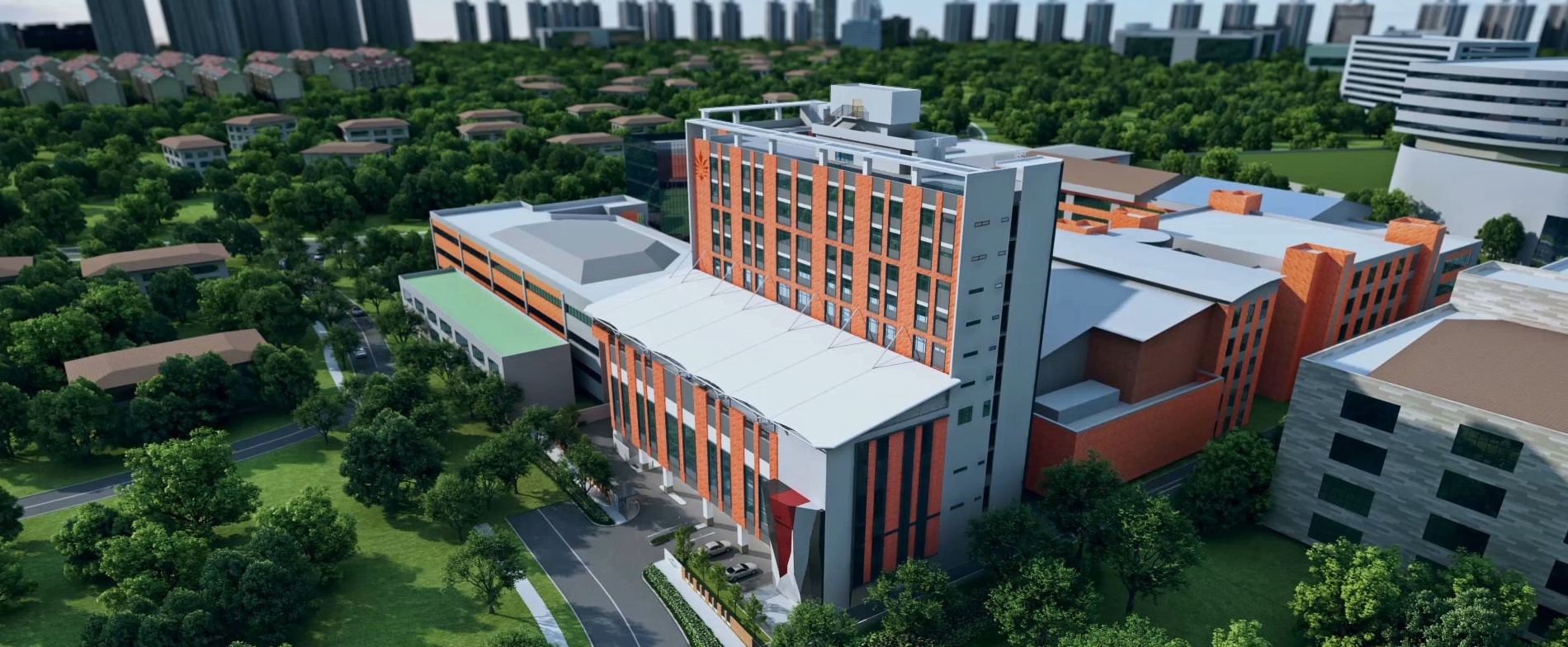
In 2023 Tanglin opened an 11-storey Centenary Building on campus, expanding total floor space by 33 percent. The building added an Olympic-standard gymnasium, a 25-metre swimming pool, a 25-metre climbing wall, and a new Music Department. In April 2025 the school launched the Tanglin Highlands Programme, a four-week immersive learning experience for Year 9 students at a new 15-acre campus in Gippsland, Australia.
The school's lease on the Portsdown Road campus has been extended to 2056, as reported in September 2026. Plans are in place for further expansion, including the construction of a new Senior School building on adjacent land, with work due to begin in 2027.
Exam results are consistently above Singapore and global averages. Provisional 2025 figures include a 100 percent IB pass rate, an average IB Diploma score of 39.3, and 63 percent A*/A grades at A Level. Around 96 percent of graduates typically receive offers from their first or second choice university.