Saudi Arabia Opens Its School Market to British Operators Under New Law
A royal decree taking effect in January rewrites the rules for foreign schools in the kingdom for the first time, and British independent schools are already in active talks about entry.

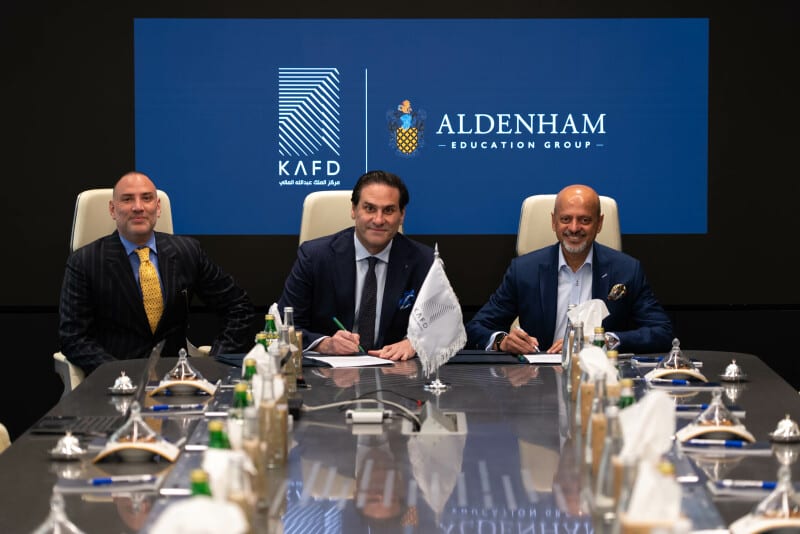
Saudi Arabia is about to become a significantly more accessible market for British-curriculum schools. A new General Education Law, issued by Royal Decree M/36 in July 2026, takes effect on 20 January 2027, and for the first time it codifies in a single statute exactly how foreign private schools obtain licences, build facilities and operate in the kingdom, according to Arabian Gulf Business Insight.
The law repeals the separate Private Schools Regulations and Foreign Schools Regulations that previously governed the sector. Under the new statute, the Ministry of Education is explicitly required to encourage private and foreign investment in education — a formal signal that the regulatory posture toward foreign operators has fundamentally shifted. Foreign investment in schools is now written into statute rather than subject to ministerial discretion.
Who is moving in
International school specialists are already positioning partners ahead of the January effective date. A specialist advisory company is in active talks with two British independent schools about entry into the Saudi market, and further operators are understood to be assessing the opportunity. The demand numbers justify the attention: only about 17 percent of Saudi students currently attend private schools, well below the rates in the UAE and Qatar. Industry forecasts point to a need for roughly 1,200 new private schools by 2030 to meet demographic growth and Vision 2030 targets on private-sector education provision.
Saudi Arabia's large and fast-growing middle class has driven sustained demand for international-style education. For the British school brands that have expanded across the UAE and Qatar over the past decade, the kingdom is the obvious next market. The absence of a clear licensing framework has historically been the main barrier keeping most international groups out; the new law removes that excuse.
What operators must accept
Entry is not unconditional. Schools teaching international curricula must retain subjects covering Saudi national identity — Arabic, religious studies and social studies — and those programmes must carry Ministry of Education approval. Accreditation through ETEC, the kingdom's education and training evaluation authority, or through an international body that ETEC approves, will be a prerequisite for all private schools.
Operators also face a timing gap. The General Education Affairs Council has until 20 January 2028, one year after the law takes effect, to issue the detailed implementing rules that replace the old regulations. That means the precise licensing pathway for a new British-curriculum school will not be fully spelled out until late 2027 at the earliest. Groups entering the market now are doing so before the full rulebook is published.
For families, both affluent Saudi nationals and expatriates, the law signals a coming wave of new British-curriculum options in a market that has historically had far fewer foreign-operator schools than its Gulf neighbours. Whether the January date produces an immediate rush of applications or a longer-horizon expansion will depend on how quickly the implementing rules follow.