Beijing · History
BSB Sanlitun: the embassy-district primary where British schooling in Beijing began
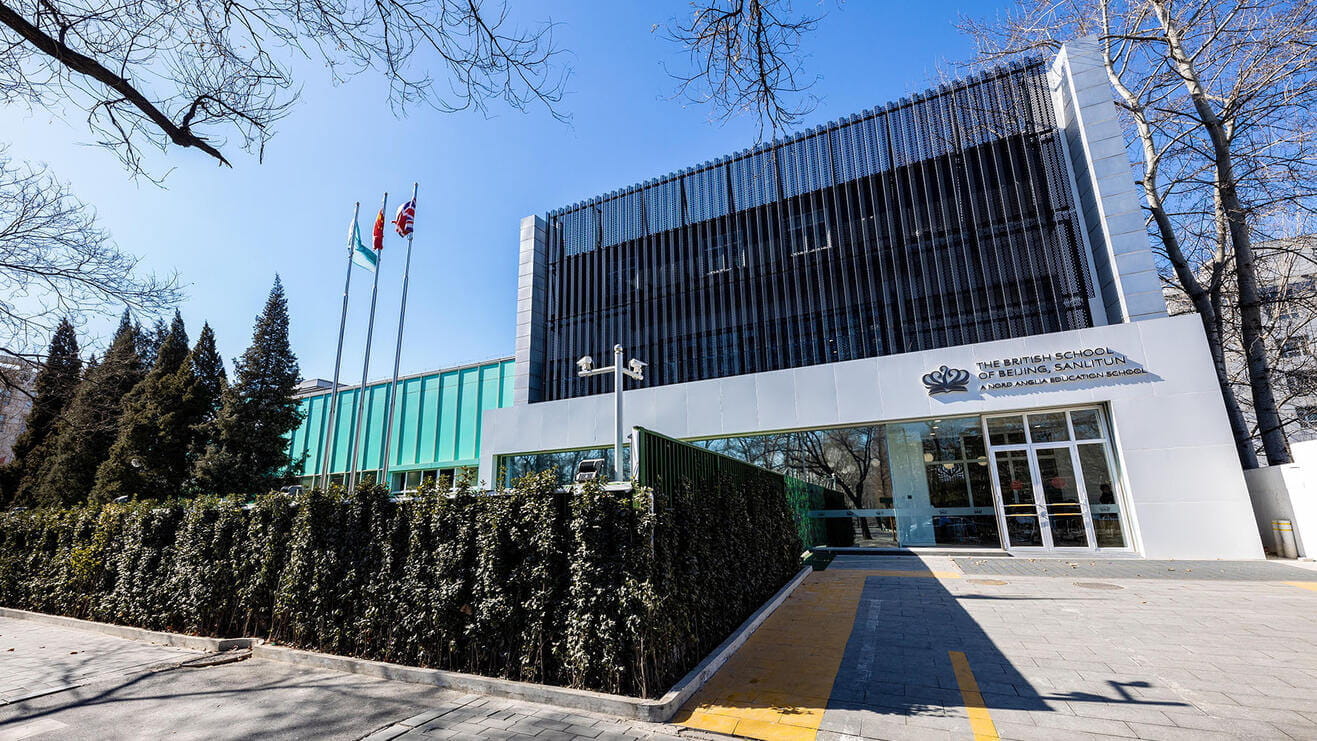
The British School of Beijing, Sanlitun opened in 2004 as the Chinese capital's first British international school. More than twenty years on, it remains downtown Beijing's only British primary campus.

Origins
The school that became BSB Sanlitun was founded in 2003 and opened on 29 March 2004, several months ahead of its planned September launch. It was the first British school established in Beijing and the founding institution of the British Schools Foundation, a group set up to serve the surge in expatriate demand as China's double-digit economic growth drew diplomats and multinational staff into the capital in large numbers. The campus sat in the heart of Chaoyang's embassy district, a deliberate choice: it put the school within walking distance of the compounds and apartment blocks where most of its prospective families lived.
The British Ambassador at the time, Christopher Hum, inaugurated the Sanlitun campus, giving the opening an official diplomatic stamp that reflected how closely the school was tied to the expatriate community it served. From the start, the school offered Early Years and Primary education through the Early Years Foundation Stage and the English National Curriculum, with Mandarin Chinese taught as a core part of the timetable.
Expansion and structural change
By 2009 the school had grown enough to justify a second campus, in Shunyi, a residential district on the outskirts of Beijing popular with expatriate families. The Shunyi campus was inaugurated by Ambassador William Ehrman. For several years both sites ran as a single institution under the British School of Beijing name. That changed in 2013, when the two campuses were separated into distinct schools, with Shunyi taking on secondary education and eventually the International Baccalaureate Diploma, and Sanlitun remaining an Early Years and Primary campus for children aged one to eleven.
Nord Anglia Education, which had been involved in running the school from early in its history, became the formal owner and operator as the British Schools Foundation's schools were absorbed into the group. BSB Sanlitun has operated under Nord Anglia since, one of more than a dozen of the group's schools in China by 2025.
Curriculum and accreditation
A British Schools Overseas inspection in March 2016, conducted by Penta International on behalf of the DfE, rated the school good overall, with outstanding provision in the Early Years. The inspection report noted a broad curriculum, effective English as an Additional Language support, Mandarin Chinese as the main modern foreign language, and an optional German programme for children likely to move to German-speaking countries. The school holds accreditation from COBIS and is a member of FOBISIA.
Nord Anglia's group-level partnerships with MIT, the Juilliard School and UNICEF run across all its schools, and BSB Sanlitun reflects them in its facilities and enrichment programmes. The campus includes an MIT Maker Space, a Juilliard keyboard room, a rooftop playground, a drama studio, a dance studio and AstroTurf pitches. Every class has both a class teacher and a teaching assistant; the school-wide teacher-to-pupil ratio stands at 1:10.
Present day
BSB Sanlitun sits at 5 Xiliujie, Sanlitun Road, Chaoyang District, and marked twenty years since its founding in 2023. The current principal is Joanne Prabhu. According to the Good Schools Guide, the school has 700 pupils drawn from more than 60 nationalities, with the optional German strand running through Years 1 to 6. Most children leaving Year 6 go on to the sister campus in Shunyi, where an agreement guarantees them a place in Year 7, keeping the two halves of the school that split in 2013 joined at the point where one ends and the other begins.
Read the full The British School of Beijing, Sanlitun profile →