Jakarta · History
From embassy classroom to 45-acre campus: BSJ at 53
Founded under British Embassy auspices in 1973, British School Jakarta has grown from a small expatriate school in Permata Hijau into one of Southeast Asia's largest British international schools, now educating 1,400 students from over 50 nationalities.

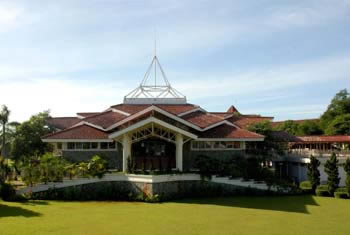
British School Jakarta began in 1973 as a modest provision for the children of British Embassy staff and expatriate families in the Indonesian capital. It was established under the auspices of the British Embassy. A parent committee ran the school in its earliest years. In 1975, that committee approached a group of British businessmen for the purpose of setting up an enlarged facility in specially built premises in Permata Hijau.
In 1976, the school was established as a Yayasan, or Foundation, in keeping with the laws of Indonesia. The British and Australian Embassies retained seats on the Council of Trustees as founder members, a governance arrangement that persists to this day. BSJ takes pride in the fact that it is a non-profit, non-franchise educational establishment.
Royal Connections and a New Name
In the early 1980s, the school was renamed The British International School under Queen Elizabeth II's command. Princess Diana visited the school on 6 November 1989, during a royal tour of Indonesia with Prince Charles. The school accumulated several such connections in its first decades.
In 1990, when there was much pressure for spaces, market research surveys and feasibility studies led to the decision to find a new site on which to build a new school for an enlarged intake and an extended age range, what became known as the Relocation Project. In 1994, BSJ relocated to a 45-acre campus in Bintaro, Tangerang Selatan, South West Jakarta, a purpose-built site with facilities that include a 750-seater theatre hall, five full-sized football fields, twelve badminton courts, three basketball courts, five semi-indoor tennis courts, a gym, a dance studio, a rock climbing wall, and an Olympic-sized swimming pool. The campus was officially opened by Prince Edward in 1994.
Phase Two of the campus development followed in 1997, adding a cafeteria, an art and technology block in the secondary school, and a range of smaller improvements. In 1999 the school opened a separate Early Years Education Centre in Pondok Indah, closer to the main expatriate corridor in south Jakarta, responding to demand for pre-school and reception places. That satellite centre was later consolidated: the Early Years Centre was comprehensively refurbished and reopened on the Bintaro campus in 2012.
The 2014 Name Change
The school changed its name from British International School to British School Jakarta in 2014 to correspond to the Indonesian government's regulations prohibiting the use of the word "international" in school names. The substance of what the school offered did not change; only the nameplate did.
Curriculum and Identity
BSJ follows the English National Curriculum in Primary with an inquiry-based approach, transitioning to the IB Middle Years Programme in Secondary (Years 7 to 11) and the IB Diploma Programme in Sixth Form (Years 12 to 13). Kindergarten follows the UK Early Years Foundation Stage from age two. This hybrid model combines the structured British primary experience with the IB's interdisciplinary approach at secondary level.
BSJ is a member of several international and British educational bodies, including the Federation of British International Schools in Asia (FOBISIA), of which the school is a founding member, the Council of International Schools (CIS), the Council of British International Schools (COBIS), the Western Association of Schools and Colleges (WASC), the Headmasters' and Headmistresses' Conference (HMC), and the Educational Collaborative for International Education (ECIS). BSJ joined FOBISIA in 1988.
In July 2023, BSJ was reaccredited by a joint Council of International Schools, International Baccalaureate, and Western Association of Schools and Colleges team for an additional five years, extending accreditation until 2028. In 2019, BSJ also received accreditation from Indonesia's Ministry of Education, recognising its commitment to high-quality educational standards within the national framework.
Results and Present Day
In the IB Diploma Programme, the Class of 2024 achieved an average score of 35 points, well above the global average of 30, along with a 97% pass rate. In the IB Career-related Programme, that same cohort recorded a 100% pass rate and an average grade of 5.5, significantly higher than the global average of 3.7. In 2025, every BSJ graduate secured a place at their first or second choice university.
BSJ today educates 1,400 students aged 2 to 18. The campus spreads across a 45-acre estate in Bintaro, 7km southwest of central Jakarta. BSJ is recognised as an Apple Distinguished School for 2025 to 2027, acknowledging its ongoing commitment to innovation in learning and teaching. Phil Edwards is serving as Interim Principal as of 2026.