India Has 268 CBSE Schools Abroad and 21 Foreign Universities at Home
Education Minister Pralhad Joshi told parliament India now has 268 CBSE schools across 26 countries and 21 foreign universities operating at home, as the government pushes a two-way internationalisation drive.

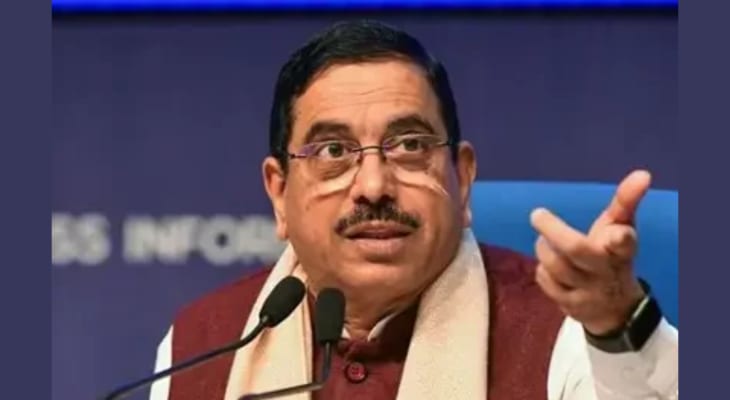
India now has 268 CBSE-affiliated schools operating in 26 countries, and 21 foreign higher education institutions have opened campuses inside India, Union Education Minister Pralhad Joshi disclosed at parliament's first Consultative Committee meeting on education internationalisation this week.
According to BW Education, Joshi chaired the two-day meeting on November 25 and 26, framing both statistics as evidence that the government's NEP 2020 framework and its Viksit Bharat 2047 vision are succeeding in positioning India as both an exporter and an importer of education. The minister confirmed that CBSE has established an overseas regional office in Dubai, its first.
Joshi outlined expansion plans including a CBSE Global initiative to standardise assessments across the international school network, broader use of the National Institute of Open Schooling overseas, and Indian university campuses abroad. An intergovernmental framework to govern those overseas campuses is under consideration.
Competition moving in both directions
The figures describe a country that is simultaneously exporting its own curriculum at scale and opening its domestic higher education market to foreign providers for the first time under sustained official policy. That two-way dynamic directly affects the competitive position of British schools, both those already operating in India and those considering entry.
Outbound CBSE growth, particularly in the Gulf and Southeast Asia where British schools also operate, adds affordable Indian-curriculum competition at the lower and mid-fee tiers. In Dubai alone, CBSE schools account for a significant share of mid-market enrolment that might otherwise go to lower-fee British alternatives.
The 21 foreign universities now operating in India give affluent local families an alternative route to an internationally recognised degree that does not require leaving the country. That reduces one of the most durable selling points of a British-curriculum school: its track record of sending students to UK universities. The UK student visa refusal rates for Indian applicants reported this week add further pressure to that pathway.
What operators are watching
Operators already in India, including Harrow, Brighton College, and GEMS, are building enrolment in a market where the question is no longer whether affluent local families want international-standard education but whether a British operator can win that family before CBSE, an Indian private chain, or a foreign university campus does. Wednesday's parliamentary disclosure makes the government's backing of the domestic system explicit and suggests that competition will only intensify.